
Water Jet Cutting: How Marmara Creates Intricate Stone Patterns in Dubai
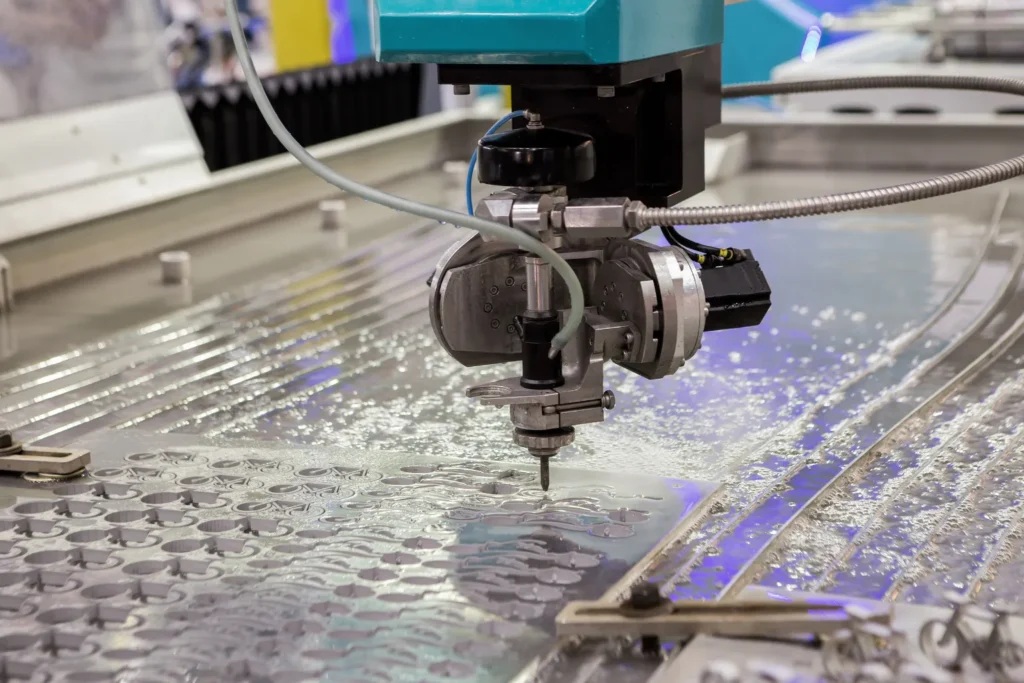
Quick Answer Water jet cutting uses an ultra-high-pressure jet of water mixed with a fine abrasive, guided by a computer, to cut natural stone with extreme precision. Because it is a cold, contact-free process, it produces clean, intricate shapes, medallions, inlays, borders, logos and bookmatched patterns, without cracking the stone or causing heat damage. This is how the bespoke marble and granite designs seen on luxury Dubai floors and feature walls are created. The most breathtaking stone floors and feature walls in Dubai are rarely cut by hand. Behind those flawless medallions, flowing inlays and razor-sharp borders is water jet cutting, a technology that lets designers treat stone almost like a canvas. Here is how the process works, why it suits natural stone so well, and the kind of bespoke designs it makes possible. Key Takeaways Precision without heat, a cold, computer-guided process cuts intricate shapes without cracking the stone. Design freedom, curves, medallions, logos and multi-stone inlays that hand-cutting cannot achieve. Tight tolerances, pieces fit together seamlessly for a flawless finished pattern. Bespoke luxury, ideal for signature floors, feature walls and branded commercial spaces. What is water jet cutting? Water jet cutting forces water through a tiny nozzle at extremely high pressure, around 4,000 bar, roughly 60,000 psi, and mixes it with a fine abrasive such as garnet. The resulting jet slices through marble, granite and other stone with remarkable accuracy. The whole process is done by CNC machines, so a digital design translates directly into precisely cut stone pieces. That link between drawing and finished cut is what makes truly bespoke stonework practical at scale. Why is water jet cutting ideal for natural stone? Stone is hard and brittle, which makes intricate shapes risky with traditional tools. Water jet cutting solves this in several ways: No heat: it is a cold process, so there is no thermal stress that could crack or discolour the stone. Clean edges: cuts are smooth with minimal chipping, reducing waste and finishing work. Complex shapes: tight curves, fine detail and interlocking pieces are all achievable. Repeatable precision: CNC control means every piece matches the design exactly, every time. What can water jet cutting create? From centrepieces to full patterned floors, here are the most popular applications: Application What it adds Floor medallions A central decorative centrepiece in entrances and lobbies Stone inlays Multi-colour patterns set flush into floors or walls Borders & trims Crisp framing for floors and feature areas Logos & monograms Branded stonework for hotels, offices and villas Bookmatched & mirrored patterns Perfectly aligned veining across feature walls Mosaics & geometric designs Intricate, repeatable patterns at scale These techniques bring to life the bold, bespoke looks featured in our 2026 stone trends guide, and they pair beautifully with statement materials such as onyx. How does water jet cutting compare with other methods? Traditional stone cutting relies on diamond blades and bridge saws, which are excellent for straight cuts and slabs but limited for intricate curves and inlays. Hand-cutting allows artistry but is slow and less precise. Water jet cutting combines the best of both, the precision of a machine with the design freedom of bespoke craft, which is why it has become the standard for luxury custom stonework. For straightforward slabs and worktops, conventional cutting remains efficient; for detailed patterns, water jet leads. Where is water jet stone work used in Dubai? Water jet cutting appears wherever stone needs to make a statement: grand villa entrances with central medallions, hotel lobbies with branded inlays, restaurant floors with geometric patterns, and feature walls with perfectly mirrored veining. It also enables the seamless, large-format and bookmatched looks now defining premium villa flooring. The result is stonework that feels custom-made for the space, because it is. How do you commission a bespoke water-jet design? The process usually starts with a concept or drawing, which is refined into a precise digital file, matched to the right stones and colours, then cut, assembled and installed. Choosing contrasting or complementary stones at the design stage is what gives medallions and inlays their depth. Working with a supplier who handles sourcing, cutting and installation keeps the whole chain aligned, so the finished pattern matches the original vision down to the millimetre. Why choose Marmara Marble & Granite for bespoke stone cutting in Dubai? Marmara Marble & Granite combines premium stone sourcing with precise fabrication to deliver bespoke designs for residential, commercial and hospitality projects across the UAE. From a single medallion to a full patterned floor, our team works from your design to cut, match and install stone to exacting tolerances. Share your concept and we will help turn it into a precision-cut reality. Explore the stone collection or learn more about Marmara. About the Author Tejesh Chinthagumpala, Managing Director, Marmara Marble & Granite LLC Tejesh Chinthagumpala is the Managing Director of Marmara Marble & Granite LLC, a UAE-based natural stone supplier and installer. A civil engineer and PMP-certified project manager trained at NICMAR Hyderabad, he previously delivered large-scale projects with Desert Group in Dubai. Since acquiring Marmara in 2022, he has grown the company from seven to 150+ specialists and expanded its operations across the UAE, Oman and Saudi Arabia. Frequently Asked Questions What is water jet cutting used for in stonework? Water jet cutting is used to create intricate stone designs such as floor medallions, inlays, borders, logos and mirrored patterns. Its precision makes detailed, custom stonework possible that traditional saws cannot achieve. Does water jet cutting damage the stone? No. It is a cold, contact-free process, so there is no heat stress to crack or discolour the stone. Cuts are clean with minimal chipping, which also reduces waste. Can water jet cutting combine different stones? Yes. Because pieces are cut to precise, interlocking shapes, different colours and types of stone can be set together to form multi-stone inlays and patterns that fit seamlessly. Is water jet cutting better than CNC blade cutting? They serve different purposes. Blade and bridge saws are efficient for straight